2009: few good choices

Nov 21, 2008 11:06 AM, By David Bennett
Farm Press Editorial Staff

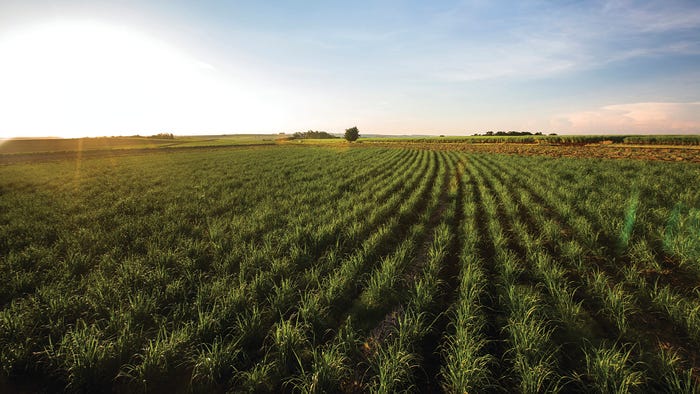
In early November, with only sugarcane and a smattering of other crops left in the field, the book was almost closed on Louisiana’s 2008 harvest season. With estimates of $900 million in crop losses and infrastructure damage due to hurricanes, it has largely been a season to forget.

“We’re currently resurveying our agents to make any necessary updates in our original loss estimates,” says Kurt Guidry, LSU AgCenter economist. “For the most part, it appears the impacts we originally estimated are very close. We thought some commodities would see significant damage and harvest has proven that. Cotton and sweet potatoes took very hard hits, for example.”

The impact in terms of revenue losses — either from quality or quantity — are “every bit as negative” as Guidry and colleagues thought they’d be.

“When looking at pre-storm/post-storm estimates of value, cotton, sweet potatoes, pecans and other commodities, there have been 50 percent losses, at least. Other commodities won’t show such high percentage losses, but you must consider the extremely high 2008 cost of production — we had the run-up in fuel and fertilizer prices — and the resulting situation for most producers.

“Any reduction in revenue — any reduction — was extremely damaging” because so many farming operations were already balancing on a knife’s edge financially.

Because of the hurricane impacts and much-reduced outlook for 2009 profitability — “especially compared to the penciling-out growers might have been doing at this time last year” — it’s a gloomy forecast. A year ago, profitability looked very good for most commodities. It’s a different story for 2009.

“Unfortunately, given current 2009 futures prices, profit margins look to be extremely tight for most commodities and certainly (don’t) project to be enough to offset any major reduction in profitability that might have been experienced as a result of the hurricanes.”

And there’s plenty of carryover debt going into next year.

“We feel many of our producers will be faced with some tough financial decisions in the off-season. That’s what brought us to the initiation of the hotline offering them assistance.”

While unable to say what the average carryover debt in the state will be — “it’s too variable from farm to farm — it’s safe to say, when looking at projected profitability for 2009, that any carryover debt will make a difficult situation much worse.

“Right now, with current commodity and input prices, there just isn’t a lot of excess capacity for producers to say, ‘Well, in 2009, we’ll do X and make some profits that will easily handle carryover debt.’”

Contracts and available credit

There are still “plenty” of Louisiana producers unable to fulfill contracts. The only slight positive to come from the dropping commodity prices is for those producers. That’s because, in some cases, the commodity price has fallen below what they contracted for and “getting out from under those contracts is now less expensive. But I don’t want anyone thinking the concerns on that have been alleviated.”

When the hurricanes swept through the state several months ago, “we were looking at much higher commodity prices than we are today. With those prices, some producers were looking at $3- and $4-per-bushel penalties for unmet contracts. That penalty level has now been reduced, but it’s still a major issue.”

What about the availability of credit for Louisiana growers considering the state of the national economy?

“From what bankers are telling me, the amount of funds available to lend shouldn’t be significantly different. What all of them are concerned about is, when viewing the downturn in commodity prices — even with input cost decreases over the last month, or so — the crops will still be very expensive to grow. The dip in input costs doesn’t take crops out of the ‘very expensive’ category.”

Urea may not be $900 per ton any more, “but $600 is still high — especially with lower commodity prices. So bankers are looking at this and asking, ‘Will producers be able to qualify for loans given the current outlook and carryover debt that many are carrying?’”

Crops and numbers

At this point last year, when putting pencil to paper with production costs, commodity prices and potential profitability for major row crops grown in Louisiana, almost any crop would make money. It’s quite different now.

“For example, last year wheat looked to be extremely profitable. Louisiana producers reacted to it like many around the country and we saw an uptick in wheat acreage.”

This year, the story isn’t one to read before bed.

“We’ve seen a welcome reduction in input costs. Fuel and fertilizer prices have fallen substantially. But not enough, because the projections for the entirety of 2009 still show high fuel and fertilizer costs. Combining that with the commodity price downturn and the basis levels doesn’t provide a lot of profits for the commodities we typically grow here.”

Currently, says Guidry, soybeans look to be fairly profitable in 2009.

Corn and grain sorghum at state average yields, even with the downturn in fertilizer prices, “look to be, at best, very marginal in terms of profitability. Producers with higher yields could still see some profits from those crops.”

Growing cotton looks to be “very challenging” in bringing in 2009 profits. December 2009 futures for cotton are in the mid-50-cent range. With high inputs, that doesn’t project out very favorably.

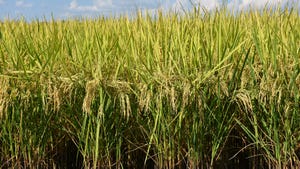
Rice looks to be “decently profitable. But that’s dependent on rice prices staying at current levels (futures for next year are about $16 per hundredweight), or moving higher. Much reduction in prices would make rice a difficult proposition in 2009. Rice will be expensive to grow next year.”

With rice prices at $16, at state average yields, “that would mean a bit over breakeven for southwest Louisiana producers. It’s a little better for some of our northeast Louisiana producers with a slightly lower cost of production.”

Profitability of rice is largely dependent on fuel and fertilizer prices: pumps have to be run and the crop requires a lot of fertilizer.

Even though fuel prices have gone down recently, the October estimate from the Energy Information Agency at the U.S. Department of Energy predicts a retail diesel price in 2009 around $3.90.

“As with all projections, these numbers can change. However, the EIA current projection of $3.90 per gallon for retail diesel still projects $3.25 to $3.50 for diesel and that’s high, especially in light of the downturn in commodity prices.

“One thing we wonder about with the current downturn in fertilizer prices — and hopefully the trend down will continue — is what will happen in the spring when demand jumps back up. I still think we’ll see fairly high fertilizer prices in 2009.

“Given all that, the picture isn’t nearly as pretty going into 2009 as it was going into 2008.”

Guidry is hopeful that some commodity prices will move up as 2009 nears. “Hopefully the projections will be a little rosier.

“When you look at the supply and demand conditions for most of our commodities, it’s still a relatively positive balance. The real wild card is the current economic downturn. Will it last and spread throughout the international markets even further? The potential is certainly there.”

Guidry believes the most vigorous combatants for 2009 acreage are likely to be corn and soybeans. Both crops are expected to have fairly tight ending stocks for the 2008-09 marketing year and “they’ll likely need to capture, or retain, acreage next year. If history is any indication, the competition between corn and soybeans will help support other commodities in terms of prices.

“But again, there is serious question about the domestic and world demand a few months down the road. Unfortunately, there are no easy answers.”

e-mail: dbennett@farmpress.com

Get Copyright ClearanceWant to use this article? Click here for options!
© 2009 Penton Media, Inc.


Latest Jobs

HEADLINES

WTO awards Brazil retaliation authority

Nov 20, 2009 11:01 AM, By Elton Robinson, Farm Press Editorial Staff
The World Trade Organization has authorized Brazil to seek retaliation against the United States for it support of two U.S. commodity programs....

Precision ag – online course

Nov 20, 2009 10:53 AM

University of Missouri Extension is offering an eight-week online course on managing farm machinery using precision agriculture, Jan. 12 through March 4....

Soybeans — U.S. key export supplier

Nov 20, 2009 10:48 AM, By Ray Nabors, Heartland Ag Network

Weather problems are now thought to be factored into market prices. ...

$485 million loss – Mississippi

Nov 19, 2009 3:57 PM, By Bonnie Coblentz, MSU Ag Communications

Mississippi State University agricultural economists calculate Mississippi farmers are suffering an estimated $485 million value loss in 2009. ...

Biofuels goal beyond ethanol

Nov 19, 2009 10:05 AM, By Hembree Brandon, Farm Press Editorial Staff

If the U.S. is to reach the government-mandated target of producing 36 billion gallons of biofuels annually by 2022, “We will need to change the way we do business,” says a USDA official....

Soybeans — dollar, oil impact

Nov 19, 2009 10:00 AM, By Paul L. Hollis, Farm Press Editorial Staff

Providing a marketing outlook on a particular commodity involves much more these days than simply looking at supply and demand numbers, says Chuck Danehower, University of Tennessee Extension farm management specialist....

Gain from a better drain

Nov 19, 2009 9:56 AM, By Liz Morrison, Corn and Soybean Digest

It was the drought of 1988 that got John Wilken thinking about the wisdom of draining his “liquid assets.”...

resources

events icon events

product info icon tradeshows

tradeshow icon digests

research icon photos

Continuing Education


(New Course)
Weed Resistance Management in Cotton

This course covers a wide range of options to effectively control weeds in cotton and reduce the risk of weed resistance management. It is accredited for hours/units for licensed/accredited applicators in 7 U.S. Cotton Belt states (Florida, Georgia, New Mexico, Oklahoma, Texas, South Carolina an d Tennessee. CCA credit is pending).

This course is accredited in Texas, Oklahoma, New Mexico, Virginia, West Virginia and Wyoming as well as for CCA credits:

(New Course)
Spray Drift Management

Keeping crop protection chemicals on the crop for which they are intended has been a cornerstone of farming not only to protect neighboring crops, but to not waste money allowing products to drift off the intended target. This accredited online continuing education course covers the critical elements of spray drift management.

Back to Top

Continuing Education


(New Course)
Weed Resistance Management in Cotton

This course covers a wide range of options to effectively control weeds in cotton and reduce the risk of weed resistance management. It is accredited for hours/units for licensed/accredited applicators in 7 U.S. Cotton Belt states (Florida, Georgia, New Mexico, Oklahoma, Texas, South Carolina an d Tennessee. CCA credit is pending).

This course is accredited in Texas, Oklahoma, New Mexico, Virginia, West Virginia and Wyoming as well as for CCA credits:

(New Course)
Spray Drift Management

Keeping crop protection chemicals on the crop for which they are intended has been a cornerstone of farming not only to protect neighboring crops, but to not waste money allowing products to drift off the intended target. This accredited online continuing education course covers the critical elements of spray drift management.

Browse Print Issues

Additional Resources

subscribe to Farm Press Daily Southeast Farm Press Southwest Farm Press Western Farm Press