Corn farmers anxious to get back into fields

Mar 28, 2008 10:15 AM, By Lamar James
Arkansas Extension Specialist

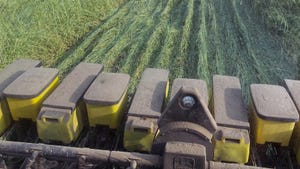
Recent rains and flooding have many Arkansas farmers cooling their heels. They would like to be preparing their land for planting corn, but weather-related problems have delayed tillage operations.

Much of the ground preparation would have been taken care of in the fall, but unfavorable weather conditions then conspired to cut that short, according to Jason Kelley, Extension agronomist/wheat and feed grains for the University of Arkansas Division of Agriculture.

In spring of 2007, farmers had planted 45 percent of the corn crop by March 25, compared to the five-year average of 14 percent. Kelley figures 5 percent or less of the crop will have been planted on March 25 this year.

“Last year, farmers were excited about high prices for corn and wanted to make sure they got it planted. Also, they were blessed with favorable weather for planting early,” Kelley explained. “At that time, we were just entering a two- or three-week period of dry, 80-degree weather. We were about two or three weeks ahead of schedule last year.”

Typically, the corn-planting season is the middle of March until the end of April.

“We still have plenty of time to plant corn without losing yield potential. That’s the take-home message. But we need dry, warm and windy weather.”

Kelley thinks farmers this year will plant slightly less corn than they did last year. Seed companies are telling him that farmers have booked as much seed as they did last year.

“I don’t think we’ll plant more than last year. Last year, corn looked most attractive from an economic standpoint. This year, all crops look profitable, and I don’t think you can go wrong planting any of them.”

Kelley said farmers can only sit and wait until fields dry out. He said farmers have a little experience planting late.

“Many farmers had to replant corn later than they would have liked after the Easter freeze last year. I believe the planting window is a little wider than what we give it credit for as long as farmers have good hybrids to plant.”

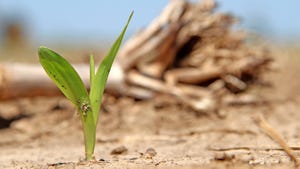
He warned corn planted recently will probably sit in the ground for two weeks, and it may not come up uniformly.

“If I were planting corn right now, I would be as happy it was in the bag as in the ground.”

e-mail: ljames@uaex.edu

Get Copyright ClearanceWant to use this article? Click here for options!
© 2009 Penton Media, Inc.


Latest Jobs

HEADLINES

Climate change not aberration

Jul 1, 2009 1:06 PM, By Forrest Laws, Farm Press Editorial Staff
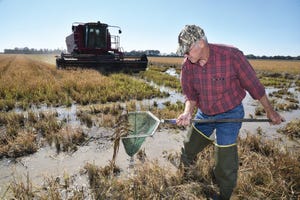
The world’s climate is getting warmer, and that could have a profound impact on U.S. agriculture, says Jerry Hatfield, supervisory plant physiologist with USDA’s National Soil Tilth Research Laboratory at Iowa State University....

Ag tech field day at Agricenter

Jul 1, 2009 1:04 PM

Agricenter International will again host the biggest field day in the Mid-South for commercial agricultural technology at the 2009 Mid-South Ag-Technology Field Day July 16 in Memphis....

100 years: LSU AgCenter Rice Research Station

Jul 1, 2009 1:02 PM, By Bruce Schultz, LSU AgCenter

The LSU AgCenter Rice Research Station at Crowley, La., is celebrating a century of operation this year, making it the oldest facility of its kind in the Western Hemisphere....

Glyphosate-resistance shocking

Jul 1, 2009 1:00 PM, By Ford L. Baldwin, Practical Weed Consultants, LLC.

I recently wrote in an article that I would sure like to get called out to a “normal-looking” rice field because I have looked at so many messes this year....

Downside of wildlife programs

Jul 1, 2009 10:18 AM, By Hembree Brandon, Farm Press Editorial Staff

We quickly learn in this business that one man’s caviar and Champagne may well be just smelly fish eggs and icky grape juice to another....

Biotechnology, trade, keys for wheat

Jul 1, 2009 10:17 AM, By Cary Blake, Farm Press Editorial Staff
The adoption of biotechnology, export expansion, and supplier reliability are crucial components to further bolster the U.S. wheat industry — a $16.5 billion economic powerhouse in 2008....

Bee-killer genome sequenced

Jul 1, 2009 10:13 AM

Agricultural Research Service scientists have sequenced the genome of an invasive parasite called Nosema ceranae that can kill honey bees and is one of the many suspects in the mysterious ailment known as colony collapse disorder (CCD)....

resources

events icon events

product info icon tradeshows

tradeshow icon digests

research icon photos

Continuing Education


(New Course)
Weed Resistance Management in Cotton

This course covers a wide range of options to effectively control weeds in cotton and reduce the risk of weed resistance management. It is accredited for hours/units for licensed/accredited applicators in 7 U.S. Cotton Belt states (Florida, Georgia, New Mexico, Oklahoma, Texas, South Carolina an d Tennessee. CCA credit is pending).

This course is accredited in Texas, Oklahoma, New Mexico, Virginia, West Virginia and Wyoming as well as for CCA credits:

(New Course)
Spray Drift Management

Keeping crop protection chemicals on the crop for which they are intended has been a cornerstone of farming not only to protect neighboring crops, but to not waste money allowing products to drift off the intended target. This accredited online continuing education course covers the critical elements of spray drift management.

Back to Top

Continuing Education


(New Course)
Weed Resistance Management in Cotton

This course covers a wide range of options to effectively control weeds in cotton and reduce the risk of weed resistance management. It is accredited for hours/units for licensed/accredited applicators in 7 U.S. Cotton Belt states (Florida, Georgia, New Mexico, Oklahoma, Texas, South Carolina an d Tennessee. CCA credit is pending).

This course is accredited in Texas, Oklahoma, New Mexico, Virginia, West Virginia and Wyoming as well as for CCA credits:

(New Course)
Spray Drift Management

Keeping crop protection chemicals on the crop for which they are intended has been a cornerstone of farming not only to protect neighboring crops, but to not waste money allowing products to drift off the intended target. This accredited online continuing education course covers the critical elements of spray drift management.

Browse Print Issues

Additional Resources

subscribe to Farm Press Daily Southeast Farm Press Southwest Farm Press Western Farm Press