Biofuel mandate could fuel more corn acres

Jul 19, 2007 10:45 AM, By Forrest Laws
Farm Press Editorial Staff

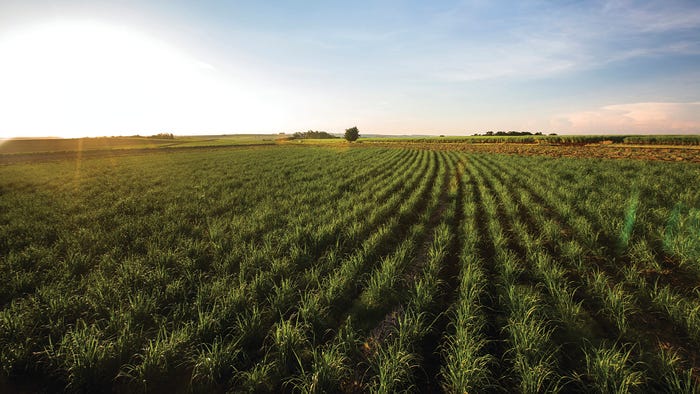
As Mid-South growers prepare to harvest the largest corn crop they’ve produced in decades, Congress is considering legislation that has the potential to make corn much more than a passing fancy in the region.

Last month, the Senate passed the Renewable Fuels, Consumer Protection and Energy Efficiency Act of 2007, legislation that, among other things, mandates the use of 15 billion gallons of biofuels in the United States by 2015.

An analysis by agricultural economists with the University of Missouri’s Food and Agricultural Policy Research Institute suggests the mandate would shift more crop acres into corn, boost corn prices, reduce soybean acreage, cut livestock production and have repercussions across all of agriculture.

“The mandate increases cash receipts for corn farmers, but it also increases their expenses through higher land and input costs and lowers their federal commodity supports,” says Pat Westhoff, policy analyst with FAPRI in Columbia, Mo.

“By placing a floor under the demand for biofuels, the mandate could increase prices for ethanol and biodiesel.”

Westhoff says the mandate for biofuels will encourage farmers to plant an additional 2.3 million acres of corn by 2015 when the mandate is in full effect. That acreage increase comes mostly at the expense of soybeans. (USDA’s latest acreage update puts corn plantings at 92.88 million acres or 3.31 million more than baseline.)

This analysis is in “Impacts of a 15-Billion Gallon Biofuels Use Mandate,” a 33-page report written by Westhoff with the assistance of the staff at FAPRI, a think tank funded, in part, by Congress to provide independent study of proposed legislation. The report compares changes under the mandate with a January 2007 FAPRI baseline under current law.

The report does not consider other provisions in the legislation, Senate Bill 1321, such as the 3-billion-gallon annual increase in required use of “advanced biofuels” such as cellulosic ethanol after 2015.

The increased demand for biofuels increases prices paid to plant operators by an average of 25 cents per gallon, or a 16-percent increase. The floor under ethanol demand assures investors in ethanol plants a more stable financial environment.

For farmers, crop cash receipts could go up $3.7 billion in 2015. However, net farm income, the money remaining to spend after expenses, increases by less than half, or $1.6 billion, according to the FAPRI analysis.

By 2015, an additional 898 million bushels of corn, above baseline (4.13 billion bushels), would be required to meet ethanol requirements. That demand would boost corn prices by 20 cents a bushel, or a 6.6 percent increase. Soybean prices also would increase, as soybean acreage and production drops. That price increase would make soy biodiesel less competitive and production could fall slightly.

In spite of changes to agriculture — and unlike analyses released by other university researchers in recent weeks — the report shows only small price increases for consumers. U.S. food expenditures may go up $817 million, an increase of 0.1 percent relative to the baseline. “That is less than $3 per person per year,” Westhoff said.

The biofuel mandate passed the U.S. Senate but has not been taken up by the House of Representatives. The House has not scheduled a vote on the bill, which doubles the current mandate of 7.5 billion gallons by 2012.

The Senate mandate would result in an additional 2.4 billion gallons of ethanol, or a 19 percent increase above the current policy baseline. Domestic production makes up most of the increase, but imports also would increase.

If petroleum prices remain high or increase, farmers could see even higher prices as the demand for ethanol may exceed the amount mandated, Westhoff said.

Livestock producers, especially those feeding corn in finishing rations, will see increased costs of production. This may result in what Westhoff calls a “modest decline in livestock, poultry and dairy production.”

Reduced production leads to higher prices for fed cattle, hogs, chicken and milk, but those go up less than 2 percent relative to baseline prices.

“Feeder steer prices decline marginally as higher feed costs lead to lower bids from feedlot operators, in spite of higher fed cattle prices,” Westhoff said. Higher meat and poultry prices result in slightly lower domestic consumption and reduced exports.

For consumers, meat prices will increase about a cent a pound relative to the baseline in 2015.

In addition to ethanol, the plants also turn out a by-product called dried distillers grains or DDGs used for livestock feed. That co-product will increase by 6.6 million tons by 2015, relative to baseline.

Presently, the price of DDGs follows the price of corn. As supplies increase, prices will drop, relative to corn. “To encourage increased use as livestock feed,” Westhoff said, “the DDG price must decline about $6 per ton, or 6 percent.”

Increased corn acreage results in sales of more seed, fertilizer and chemicals by related agribusinesses. As crop acres increase farmers see increased costs in rental rates and farmland prices. Farm real estate values will increase by $39 per acre, relative to the baseline, in 2015.

MU FAPRI uses computer models of the U.S. agricultural economy to run annual baselines projecting supply, demand and prices for commodities. The baseline assumes normal weather and continuation of current policy. From baselines, analysts run “what-if” scenarios to measure likely impacts of changes in legislated policy. Most FAPRI studies are on farm policy; but the models also work for energy analysis.

The FAPRI report is available online at http://www.fapri.missouri.edu.

e-mail: flaws@farmpress.com

Get Copyright ClearanceWant to use this article? Click here for options!
© 2010 Penton Media, Inc.


Latest Jobs

HEADLINES

NCC: 10.1 million cotton acres

Feb 8, 2010 10:30 AM, By Elton Robinson, Farm Press Editorial Staff

After three straight years of declines, U.S. cotton acreage could be headed back up, according to the National Cotton Council’s 27th annual Early Season Planting Intentions Survey....

Weed resistance, Washington headline Farm & Gin Show

Feb 8, 2010 10:24 AM

This year’s Mid-South Farm and Gin Show offers “perhaps the best set of exhibits ever,” says Tim Price, manager of the annual event to be held Feb. 26-27 at the downtown Memphis Cook Convention Center....

Darneille elected CCI president

Feb 8, 2010 10:22 AM

Wallace L. (Wally) Darneille, a Lubbock, Texas, cooperative official, will serve as 2010 president of Cotton Council International, the National Cotton Council’s export promotions arm....

Rice ‘growth industry’ — Weisemeyer

Feb 8, 2010 10:10 AM, By Bruce Schultz, LSU AgCenter

Farmers attending the 2010 joint annual meeting of the Louisiana Rice Council and the Louisiana Rice Growers Association heard an optimistic report from a Washington, D.C., agriculture journalist recently....

U.S. cotton acres: 10.1 million

Feb 5, 2010 5:06 PM

U.S. cotton producers are expected to plant more than 10 million acres for the first time in three years as they begin making preparations for the 2010 planting season....

Cotton prices — take advantage

Feb 5, 2010 8:10 AM, By Elton Robinson, Farm Press Editorial Staff

An expected rise in cotton acres and production in the United States and around the world could weigh on cotton prices this year, meaning producers need to take advantage of pricing opportunities when they can, say analysts speaking at the Ag Market Network’s January teleconference....

Rice/soybean no-till rotation

Feb 5, 2010 8:08 AM, By David Bennett, Farm Press Editorial Staff

For growers employing conservation-till/no-till systems, an exceptionally wet 2009 means much more field-prep work will be required going into 2010. ...

resources

events icon events

product info icon tradeshows

tradeshow icon digests

research icon photos

Continuing Education


(New Course)
Weed Resistance Management in Cotton

This course covers a wide range of options to effectively control weeds in cotton and reduce the risk of weed resistance management. It is accredited for hours/units for licensed/accredited applicators in 7 U.S. Cotton Belt states (Florida, Georgia, New Mexico, Oklahoma, Texas, South Carolina an d Tennessee. CCA credit is pending).

This course is accredited in Texas, Oklahoma, New Mexico, Virginia, West Virginia and Wyoming as well as for CCA credits:

(New Course)
Spray Drift Management

Keeping crop protection chemicals on the crop for which they are intended has been a cornerstone of farming not only to protect neighboring crops, but to not waste money allowing products to drift off the intended target. This accredited online continuing education course covers the critical elements of spray drift management.

Back to Top

Browse Print Issues

Additional Resources

subscribe to Farm Press Daily Southeast Farm Press Southwest Farm Press Western Farm Press