Biofuels goal beyond ethanol

Nov 19, 2009 10:05 AM, By Hembree Brandon, Farm Press Editorial Staff
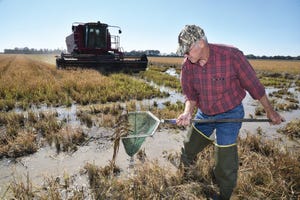
The use of biomass and other dedicated energy crops to produce second- and third-generation biofuels could potentially create an entirely new agricultural commodity sector.

If the U.S. is to reach the government-mandated target of producing 36 billion gallons of biofuels annually by 2022, “We will need to change the way we do business,” says a USDA official.

The Energy Independence and Security Act of 2007 (EISA) specifies that less than half that amount, 15 billion gallons, can come from ethanol produced from grain, says Rajiv Shah, under secretary for Research, Education, and Economics.

“This means that 21 billion gallons of biofuels will need to come from other sources,” he told the House Subcommittee on Conservation, Credit, Energy and Research.

The 9 billion gallons of first generation biofuels (ethanol from corn) being produced annually represents “a significant accomplishment and a compliment to American farmers and the ethanol industry,” Shah says. Farmers “knew how to efficiently produce corn, the technology for producing corn start-based ethanol was already available, and — very importantly — corn acreage was increased to support greater ethanol output.”

But, if the U.S. is to meet the EISA goals “we need to accelerate the establishment of a sustainable commercial biofuels industry” utilizing second- and third-generation technologies.

“Second-generation biofuels technologies that turn crop residues, such as corn stover or dedicated energy crops such as switchgrass, into ethanol, and third-generation technologies that turn these feedstocks into advanced biofuels — synthetic substitutes for gasoline, jet fuel, and diesel — will have to rapidly come into commercial use.”

Although the U.S. has funded “thousands of worthy biofuels projects,” Shah says, “there has been little effective integration of these efforts across government agencies, and there has not been a focus of partnering with public and private resources to develop biofuel supply chains capable of achieving Congress’ goals.”

Significant parts of the supply chain “have been ignored or have received too little attention, such as sustainable feedstock production systems, solutions to lower the cost of biomass transport, and efforts to enhance compatibility with America’s existing fuel distribution and utilization systems.”

As chief scientist for USDA, Shah says he will allocate “sufficient resources from our research assets where scientific breakthroughs can make significant contributions to the emerging biofuels industry, and where our core competencies can have the most impact.”

The use of biomass and other dedicated energy crops to produce second- and third-generation biofuels “could potentially create an entirely new agricultural commodity sector,” he says. “The federal government must also invest in technologies that will improve the economics for producers and consumers alike, and lead to greater wealth creation in rural communities.”

Shah says USDA’s focus will be on feedstock development for a range of first-, second-, and third-generation bioenergy crops, with continued work in corn, where Agricultural Research Service scientists “have made important recent discoveries in genomics.”

And he says, “We will build a robust portfolio in perennial grasses such as switchgrass and miscanthus, energy cane, sorghum, and other potential dedicated feedstocks.”

e-mail: hbrandon@farmpress.com

Get Copyright ClearanceWant to use this article? Click here for options!
© 2010 Penton Media, Inc.


Latest Jobs

resources

events icon events

product info icon tradeshows

tradeshow icon digests

research icon photos

Continuing Education


(New Course)
Weed Resistance Management in Cotton

This course covers a wide range of options to effectively control weeds in cotton and reduce the risk of weed resistance management. It is accredited for hours/units for licensed/accredited applicators in 7 U.S. Cotton Belt states (Florida, Georgia, New Mexico, Oklahoma, Texas, South Carolina an d Tennessee. CCA credit is pending).

This course is accredited in Texas, Oklahoma, New Mexico, Virginia, West Virginia and Wyoming as well as for CCA credits:

(New Course)
Spray Drift Management

Keeping crop protection chemicals on the crop for which they are intended has been a cornerstone of farming not only to protect neighboring crops, but to not waste money allowing products to drift off the intended target. This accredited online continuing education course covers the critical elements of spray drift management.

Back to Top

Browse Print Issues

Additional Resources

subscribe to Farm Press Daily Southeast Farm Press Southwest Farm Press Western Farm Press