Biofuel facilities under way in Louisiana

Mar 1, 2007 9:44 AM


Louisiana’s Gov. Kathleen Blanco and other officials in the Mermentau, La., area recently joined a Massachusetts company in a groundbreaking and ribbon-cutting ceremony recently for two facilities that will use agricultural wastes to make ethanol.

Celunol Corp., a privately held biofuels technology development company based in Cambridge, Mass., will operate both facilities — one a demonstration-scale facility and the other, a pilot plant for research and development.

The demonstration facility will convert cellulose into ethanol when it is finished by year’s end. Its patented process will use microorganisms and specialty enzymes to convert up to 95 percent of the sugars in biomass feedstock into ethanol.

The plant will have a rated design capacity of 1.4 million gallons of ethanol per year, the company said.

The groundbreaking was for a plant that will use bagasse, the byproduct of sugar production, as its fuel, which will be provided by the Cajun Cooperative at New Iberia, La.

“We’ve always had extra bagasse, and it’s a problem because we’ve got to pay to get rid of it,” said Anthony Judice, a sugarcane farmer and co-op vice president.

Judice said some bagasse can be used as fuel at the sugar mill, but the highly efficient boiler system at the co-op’s mill limits how much bagasse can be used, leaving 30,000 to 40,000 tons of the waste for disposal annually.

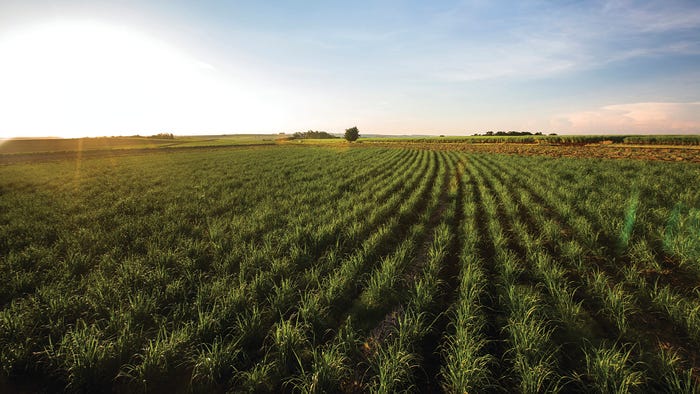
In addition, the cooperative will grow 15 acres of sugarcane, with seed provided by the LSU AgCenter, which will be used at the ethanol plant for experimentation, according to cooperative board member Ricky Judice.

Paul Coreil, LSU AgCenter vice chancellor for extension, said the AgCenter is working to increase agricultural production of renewable energy sources.

“We’re bullish on renewable energy in Louisiana,” Coreil said. “This state has the soil, climate and the moisture for this.”

Louisiana farmers are already benefiting from the ethanol production, he said, with corn farmers in Louisiana expected to double their acreage from last year.

Most ethanol produced in the United States now is from grain, primarily corn. Cellulosic ethanol is made by breaking down the basic plant component, cellulose, to make fuel.

Celunol has licensed its technology to a Japanese company to make ethanol from wood products.

Peter Rein, LSU AgCenter professor at the Audubon Sugar Institute, said cellulosic ethanol is a proven technology. “The question is can you do it and make a profit,” Rein said.

Carlos Riva, Celunol president, said that’s what the demonstration project will do. “We expect that the demonstration facility we are constructing will validate the economics of this process on a much larger scale,” Riva said. “The pilot plant we have inaugurated here illustrates the technical feasibility of producing ethanol on a high-yield basis from lost-cost crops and agricultural residues.”

Also at the ceremony the company cut a ribbon signifying the completion of a pilot plant for research and development, which will use a wide variety of feedstocks, including grasses, sugarcane and woodchips.

“These two milestones mark a significant step forward for Louisiana and our nation,” Blanco said.

The governor said the technology could benefit the sugarcane industry the same way increased demand for corn benefited farmers in the Midwest.

Doug Faulkner, deputy undersecretary for the U.S. Department of Agriculture, said the plant is a step to developing technologies that will lessen dependence on foreign petroleum.

Wind power has quadrupled in the United States, and the amount of American-produced ethanol has gone from 1.6 billion gallons in 2000 to more than 5 billion gallons in 2006. Facilities to produce an additional 6 billion gallons are under construction.

Renewable energy is the biggest chance for the creation of wealth in the U.S. farming economy, Faulkner said. “It’s a renaissance for rural America,” he said.

Get Copyright ClearanceWant to use this article? Click here for options!
© 2008 Penton Media, Inc.


Latest Jobs

resources

events icon events

product info icon tradeshows

tradeshow icon digests

research icon photos

Continuing Education

For Texas and Oklahoma Licensed Applicators

A free online continuing education course on spray drift management accredited by the Texas and Oklahoma departments of agriculture.

For National Certified Crop Advisers

A free American Society of Agronomy-accredited one-CEU course on spray drift management.

ACCREDITED IN CALIFORNIA ONLY:


Almond Pest Management

Get the latest info on almond insect pest management and earn 2 hrs. CE DPR and CCA credit in California.

California Groundwater Protection Regulations

Earn 2 hrs. in California laws and regs CE and learn how to protect California groundwater supplies.

Powdery Mildew Control in California Grapevines

Learn about the No. 1 grape disease in California; earn 2 California CE hours.

ACCREDITED IN CALIFORNIA AND ARIZONA:


Insecticide Resistance Management in Agronomic and Row Crops

A 3-hr. CE approved for California and Arizona licensees and CCAs in both states.

Agronomic Weed Resistance Management in Row Crops, Trees Nuts and Vines

Weeds Resistance Management is approved for 3 hours of CE credit for all California and Arizona licensees and Certified Crop Advisers.

Lepidopterous Pest Management/ Pesticide Safety

This course is approved for 2 hours in Arizona and California (1 hr. of laws/regs; 1 hour Other) and for CCAs.

Managing Spray Drift to Minimize Problems

2-hrs laws and regs for California licensees; 2 hours in Arizona and for CCAs.

Back to Top

Browse Print Issues

Additional Resources

subscribe to Farm Press Daily Southeast Farm Press Southwest Farm Press Western Farm Press